Crackle, Hiss and Clarity: Why Lo-Fi and Hi-Fi Are Bad Words for Good Sound
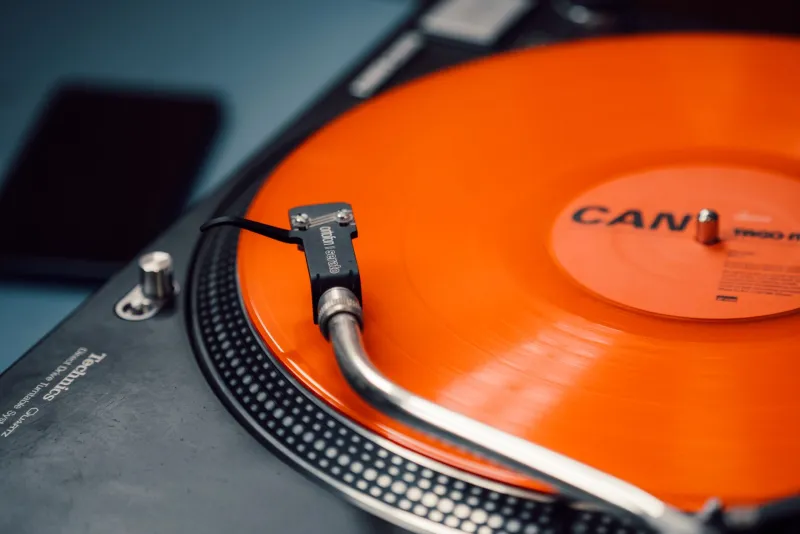
Words matter in hi-fi. They shape what we expect, what we buy and what we forgive. In the UK in 2026, two words are doing a lot of heavy lifting: lo-fi and hi-fi. One has become a badge for warmth, nostalgia and authenticity. The other still suggests clinical precision, white lab coats and a listening chair nobody actually owns. Neither is a useful description of a satisfying system.
The labels we use
Lo-fi began as a production term. It meant limited equipment, tape hiss, room noise and imperfect takes. It was a sound, not a playback standard. Somewhere along the way it became a lifestyle: crackle as character, hiss as honesty, compressed streaming as a cosy blanket. Hi-fi began as a promise of fidelity to the recording. Somewhere along the way it became a shorthand for bright, thin and expensive.
The problem is that both labels mix up three different things: the recording, the playback equipment and the room. A crackly 1960s jazz LP played through a warm, rolled-off system is not more authentic than the same music streamed cleanly. It is just different. A clean digital file through a bright system is not more accurate if the room is adding a honky resonance at 200 Hz. The room always gets a vote.
What vinyl crackle actually is
Vinyl crackle is noise. It is dust, static, pressing faults and wear. It is not warmth, although it can feel warm because it sits on top of the music like a familiar blanket. On a Sunday morning in a small UK flat, that noise can be emotionally right. The ritual of lowering the needle, the slight rumble, the surface noise between tracks: it all signals that you are listening deliberately.
But be honest about the trade-off. A noisy pressing masks detail. A worn stylus adds distortion. A cheap turntable can add rumble and speed instability that no amount of nostalgia fixes. If you prefer the sound of vinyl, say that. Do not claim it is objectively more accurate. It is a different set of compromises, and some of them are lovely.
Cassette hiss and the warmth myth
Cassette hiss is also noise. Tape saturation can add compression and harmonic distortion that flatter some music, especially drums and vocals. That is a real effect, not a delusion. But a cassette deck with poor wow and flutter, a stretched tape or a dirty head is not warm. It is just broken.
The same confusion surrounds the word warm. Warm can mean a gentle treble roll-off, a boost in the upper bass, second-harmonic distortion or simply a room with soft furnishings. Those are different things. If you cannot describe which one you mean, you cannot shop for it. You will end up buying whatever a forum calls warm and hoping for the best.
Digital clarity is not the enemy
Digital clarity has a reputation problem. In a badly set-up system, it can sound glassy, forward and relentless. But that is often the room, the recording or an unhelpful treble lift, not digital itself. A budget DAC in 2026 can be remarkably clean. A £100 streamer can deliver bit-perfect files without drama. The weak links are usually speakers, placement and the listener’s tolerance for reflections.
Take a simple test. Play a well-recorded acoustic track on vinyl and on a streaming service at the same sensible volume. Match levels as closely as you can. Listen for what changes. You may prefer the vinyl for its body and its ritual. You may prefer the stream for its silence between notes and its lack of surface noise. Both are legitimate. Neither tells you which format is hi-fi.
Room correction changes the argument
Room correction is the most underrated tool in the 2026 UK listening debate. In a small flat with a bay window, a chimney breast and a sofa against the wall, the room is doing more damage than any DAC. Digital room correction, whether built into a streamer, an AV receiver or a standalone box, can smooth out boomy bass and tidy up the midrange. It is not cheating. It is addressing the actual problem.
Once you have heard a system with sensible room correction in a difficult room, the lo-fi versus hi-fi argument starts to look quaint. A warm, noisy vinyl system can coexist with a clean digital system. The point is not to pick a tribe. The point is to know what you are hearing and why.
A more honest vocabulary
We need better words. Say coloured instead of warm when you mean a frequency response tilt. Say noisy when you mean surface noise. Say detailed when you mean treble emphasis, and say bright if it hurts. Say room-limited when the bass is uneven. Say dynamic when the music jumps. Say lo-fi only when you are talking about the recording aesthetic.
That vocabulary does not kill the romance. It makes it easier to reproduce. If you love the sound of a crackly record, you can build a system that serves it without pretending it is neutral. If you love clean digital, you can admit that and still enjoy a warm cartridge. The UK has a long history of small, sensible hi-fi: Rega, Cambridge, Wharfedale, Q Acoustics and countless repair shops keeping old gear alive. That tradition is not about labels. It is about listening.
In 2026, the most honest thing you can say about your system is not that it is lo-fi or hi-fi. It is that it suits the room, the records and the neighbours. Everything else is marketing.