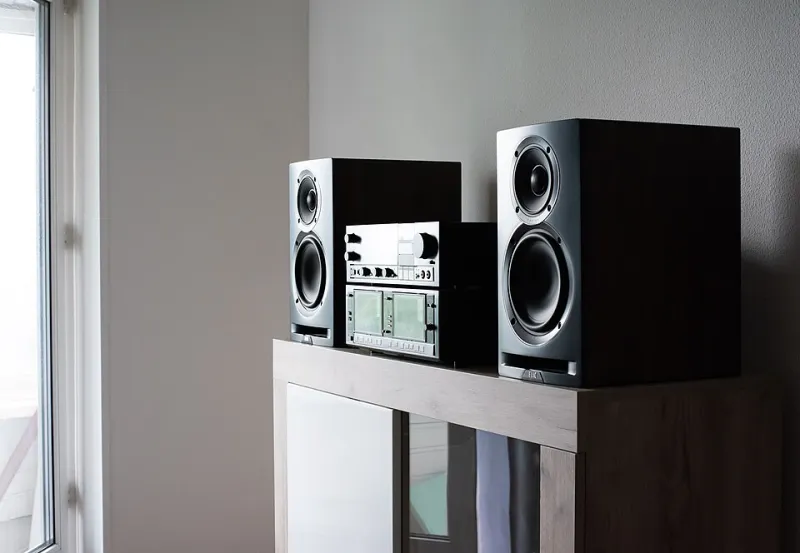
The Unstreamed Hour: Putting Live Radio 3 Back Through a Proper Hi-Fi
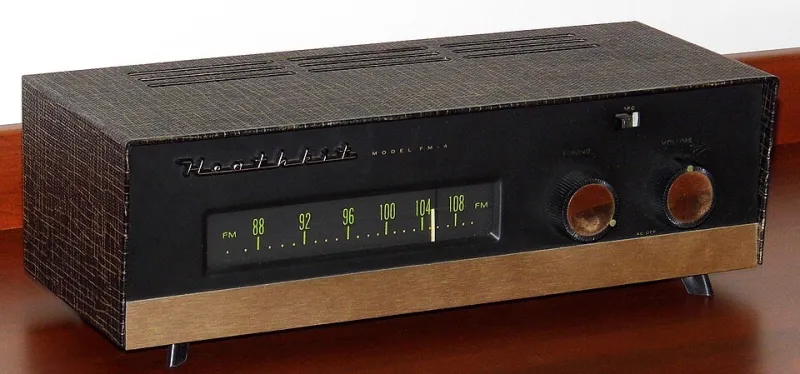
Photo: Joe Haupt from USA, CC BY 2.0, via Wikimedia Commons
There is a particular pleasure in hearing a concert go out live. No queue, no algorithm, no buffering wheel — just an announcer saying good evening and an orchestra settling into the first bars. BBC Radio 3 still does this beautifully, and it remains one of the best reasons to own a proper hi-fi rather than a smart speaker that has opinions about your kitchen.
The problem is that radio has become oddly awkward to feed into a serious system. The BBC has moved with the times, the hardware has fragmented, and plenty of good amplifiers now sit with an unused input while a little plastic speaker does the work. That feels backwards. If you already have decent speakers and an amp, getting live radio back into the chain is usually simpler than it looks — provided you start in the right place.
Start with the socket, not the box
Before you buy anything, look at the back of your amplifier. You want a line-level input: auxiliary, tape in, CD, tuner, or anything marked with a fixed-level source. Do not use the phono input unless you enjoy the sound of a gain stage being mugged. A line-level socket expects a normal, roughly 1–2V signal; a moving-magnet phono stage expects a tiny signal from a cartridge and adds a hefty dose of equalisation. Plug a tuner into the wrong one and you will get loud, distorted mush.
Most modern tuners and streamers give you RCA outputs, sometimes a 3.5mm jack, occasionally optical or coaxial digital. If your amp has a spare RCA pair, you are basically done. If every input is taken, a simple line-level switch box is fine. It is not glamorous, but neither is unplugging cables every evening.
FM still has a quiet advantage
A decent FM tuner is not a museum piece. BBC Radio 3 is carried on FM across the UK, and with a clean signal it can sound remarkably natural — often more natural than a heavily processed digital feed. The catch is the aerial. A piece of wire dangling behind the rack is not an aerial; it is a plea for multipath distortion.
Start with a proper indoor dipole if you are close to a transmitter, and get it as high and as clear of metal as you can. In a British period home with thick walls, a loft aerial is often the sweet spot. If you are rural or in a signal shadow, a modest rooftop FM aerial will do more for sound quality than any cable upgrade. You do not need a giant broadcast mast. You need height, orientation and a clean path.
FM tuners also vary. A well-aligned old Japanese tuner can be lovely, but sensitivity and selectivity matter more than badge nostalgia. If yours hisses in stereo, the aerial is the first suspect, not the output stage.
DAB is convenient, but listen before you commit
DAB and DAB+ tuners are easy to live with: no aerial twitching, no tuning dial, and a tidy display. For speech radio they are perfectly pleasant. For orchestral music, though, bitrates and processing vary, and a DAB feed can sound slightly flat or glassy next to a good FM signal. That is not a reason to avoid it; it is a reason to audition it in your room rather than buying on specification alone.
A DAB aerial wants to be vertical and reasonably high. Do not assume a splitter that feeds the telly will do the job well. Keep the aerial away from routers, LED drivers and cheap switch-mode power supplies. And be sceptical of boosters: if the signal is not there, amplifying noise is not an upgrade.
The internet bridge is the flexible route
Network streamers and internet-radio bridges have become the pragmatic answer for many UK listeners. A small streamer with BBC Radio 3 as a preset can feed your amp via RCA, optical or coaxial digital. Some have decent internal DACs; others are better used as transports into a DAC you already trust.
The trade-offs are latency and dependence on the network. Live concerts can arrive seconds late, which matters if you are also watching a broadcast or following a score. Buffering can be rock solid or irritating depending on your broadband and the stream. And not every internet-radio app is a joy to use. Still, for choice and convenience, a bridge is hard to beat — especially if your FM reception is poor.
What actually improves Radio 3
In order: aerial, tuner or streamer, then everything else. A better aerial reduces noise and multipath, which cleans up speech and stops strings sounding smeared. A better tuner or streamer improves sensitivity, decoding and output quality. Cables come a distant third. A sensible shielded RCA lead is enough; you do not need to spend the price of a Proms season on Ethernet cable.
Room and speaker placement still dominate. Radio 3 is a great test of speech intelligibility because announcers have actual consonants, and a great test of music because a live concert has natural dynamics. If the announcer sounds chesty and the orchestra sounds like it is behind a curtain, move the speakers before you buy a new DAC.
A simple listening test
Tune to a live evening concert and compare FM, DAB and internet if you can. Listen to the announcer first, then a solo instrument, then the full orchestra. Check for hiss, grit, stereo width and audience applause. Applause is brutally revealing. Match levels carefully; louder almost always sounds better for the first thirty seconds. Live with each source for a few evenings before deciding.
In 2026, the tuner is not dead. It is just often fed badly. Give it a proper aerial and a line-level socket, and BBC Radio 3 will remind you why the separates system earned its place in the first place.