The Dry Spell: Why Your Records Crackle More Once the Radiators Are On
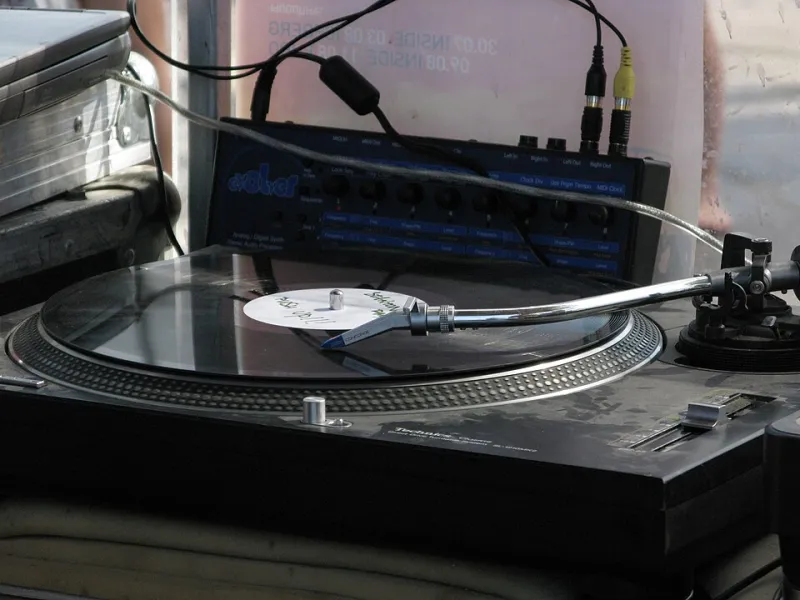
Photo: Vyacheslav Argenberg, CC BY 4.0, via Wikimedia Commons
By mid-November, most British listening rooms have settled into their winter routine: windows shut, radiators ticking, and a familiar faint crackle appearing between tracks that was not there in September. It is tempting to blame the heating, the turntable, or the record itself. Usually the truth is less dramatic. The air has changed, and your vinyl is behaving exactly as physics suggests it should.
The heating is not the villain — dry air is
Central heating does not reach into your record grooves and rough them up. What it does is lower relative humidity. Cold outside air holds very little moisture; warm it indoors and its relative humidity drops, even though the actual amount of water in the air has not changed much. In a closed British living room in winter, relative humidity can easily fall into the thirties or lower. That is comfortable enough for humans, but it is good news for static and bad news for dust control.
A vinyl record is a decent insulator. In damp air, stray charge leaks away quietly. In dry air, it lingers. The result is the familiar winter pantomime: the record clings to its inner sleeve, dust settles in a neat pattern, and lifting the disc produces a small pop or a faint tick that disappears after a clean. None of this automatically means your stylus is carving up the grooves.
What static actually does to a record
Static charge attracts lightweight dust and makes it stick to the playing surface. Some of that dust is abrasive, some is merely annoying, and some is the reason you hear crackle. Dry air also makes dust more mobile in the first place, so there is more of it floating around when you pull a record from its sleeve. Add a wool jumper, a synthetic carpet, or a dry central-heating breeze and you have a reliable little charge generator.
The noise you hear is often a mixture of tiny discharges and particles being disturbed by the stylus. It tends to be light, intermittent, and worse in dry weather. It may change after a brush, a new inner sleeve, or a damper day. It is not the same as groove damage, and treating it like damage leads people to buy gadgets they do not need.
Static crackle versus worn vinyl
A genuinely worn or damaged record usually tells you a more consistent story. You might hear the same tick at the same point on every revolution, distortion on loud passages, or a dull grey sheen across the playing surface. A record that has been played with a worn stylus or a badly set-up arm can sound gritty even after a proper clean. Static, by contrast, is often patchy. It may vanish when humidity rises, or move around after cleaning.
If a record still crackles after a wet clean and a new inner sleeve, and the noise is fixed to one spot, suspect wear, damage, or contamination rather than the weather. If every record in the house has become slightly noisier since the boiler came on, start with the room.
The £10 first step: measure, do not guess
Before buying an anti-static gadget, buy a cheap hygrometer. A basic digital indoor hygrometer costs around £10 from a hardware shop or online, and it will tell you more than any forum argument. Put it near the hi-fi, but not directly above a radiator. In winter, aim for roughly 40–50% relative humidity in the listening room. Below about 35% static is more likely; above 60% you are drifting into damp territory, which is its own problem for sleeves and records.
You do not need laboratory precision. You need to know whether your room is desert-dry or merely British-dry. That single reading stops most unnecessary purchases.
Cheap fixes that actually help
Start with handling. Touch a grounded metal object before pulling a record from its sleeve, and avoid shuffling across a synthetic carpet in wool socks. It sounds daft, but discharging yourself costs nothing.
Brush properly. A carbon-fibre brush used with a light, steady motion along the grooves can remove loose dust, but do not scrub. Clean the stylus regularly with a proper stylus brush. If a record has never been wet-cleaned, one careful clean with a known record-cleaning fluid or machine can remove the packed-in debris that dry brushing cannot shift. Avoid homemade potions and keep liquid away from the label.
Use anti-static inner sleeves. Replacing tired paper sleeves is one of the cheapest upgrades in vinyl. Paper scuffs and holds dust; a decent anti-static sleeve lets the record slide out without a fight.
Check the earth wire. The thin earth lead from your turntable to the amp or phono stage is there to reduce hum and give a discharge path. If it is missing, loose, or broken, fix that before buying anything with an ion in its name. Do not start poking around inside mains plugs unless you know exactly what you are doing.
Manage humidity sensibly. A cheap cool-mist humidifier with a hygrometer is more predictable than a bowl of water on the radiator, which is mostly decoration. Drying laundry indoors and a few houseplants can nudge humidity up, but ventilation matters too. Do not turn the room into a fern house in pursuit of perfect vinyl.
Anti-static guns and ionisers can work, but they are the last step, not the first. If you have measured the room, cleaned the records, and fixed the earthing, then try one. Do not spend £200 solving a £10 problem.
A winter routine that costs very little
Keep the hygrometer visible. Give each side a quick brush. Touch something earthed before handling. Return records to anti-static sleeves and store them upright, away from radiators and sunny windows. Clean the stylus before a listening session rather than after. If the room drops below 35% for days on end, add a little humidity and see whether the crackle changes.
The central heating is not out to get your collection. It is simply making the air drier, and dry air makes static and dust more obvious. Measure first, clean properly, earth sensibly, and only then consider a gadget. In most British homes, that is enough to get the music back without turning the living room into a laboratory.