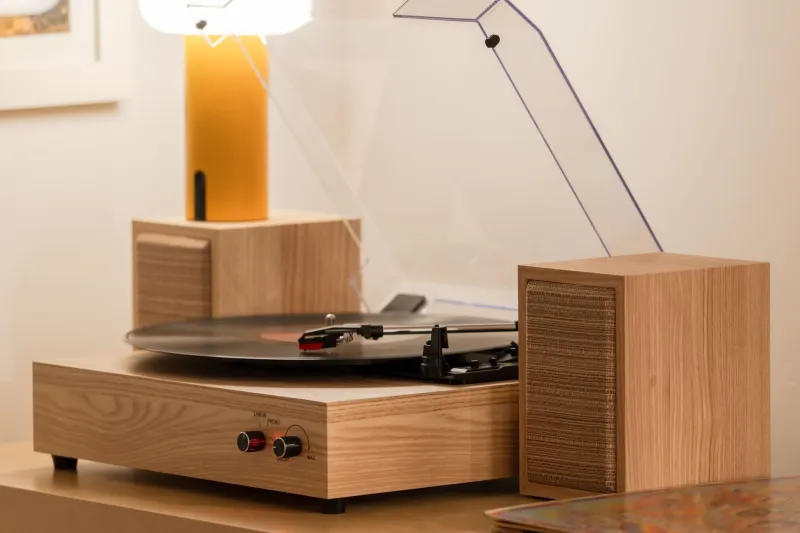
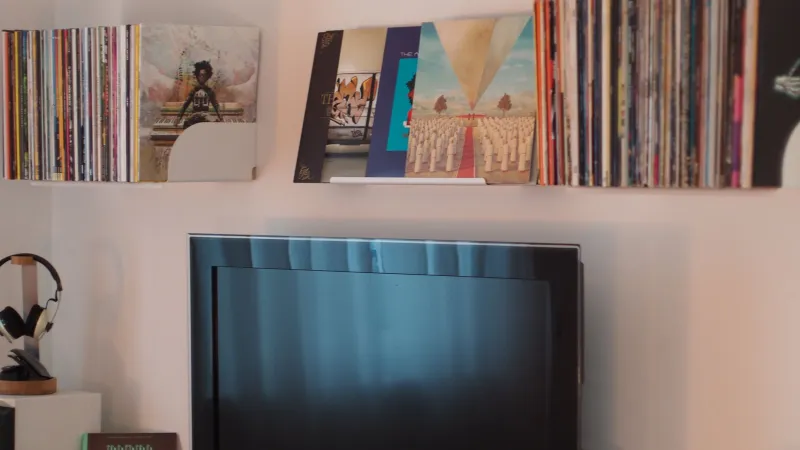
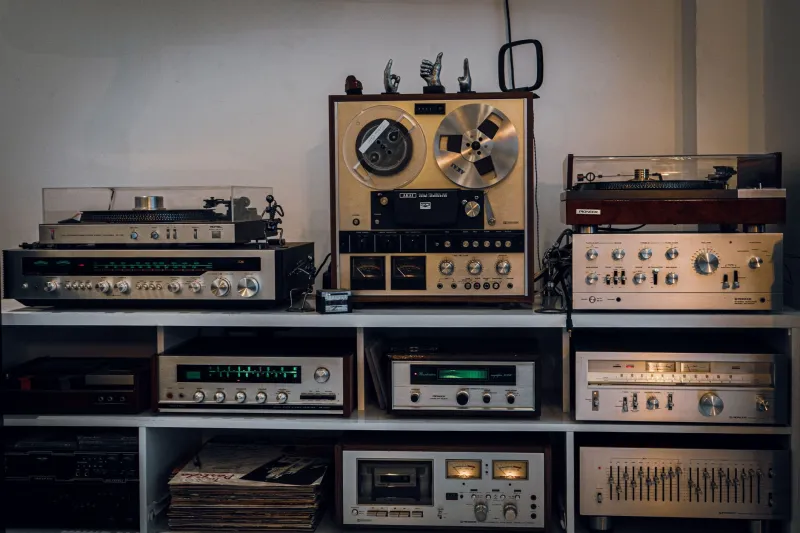
The Desk Is Not a Compromise: Nearfield Sound for Tight UK Rooms
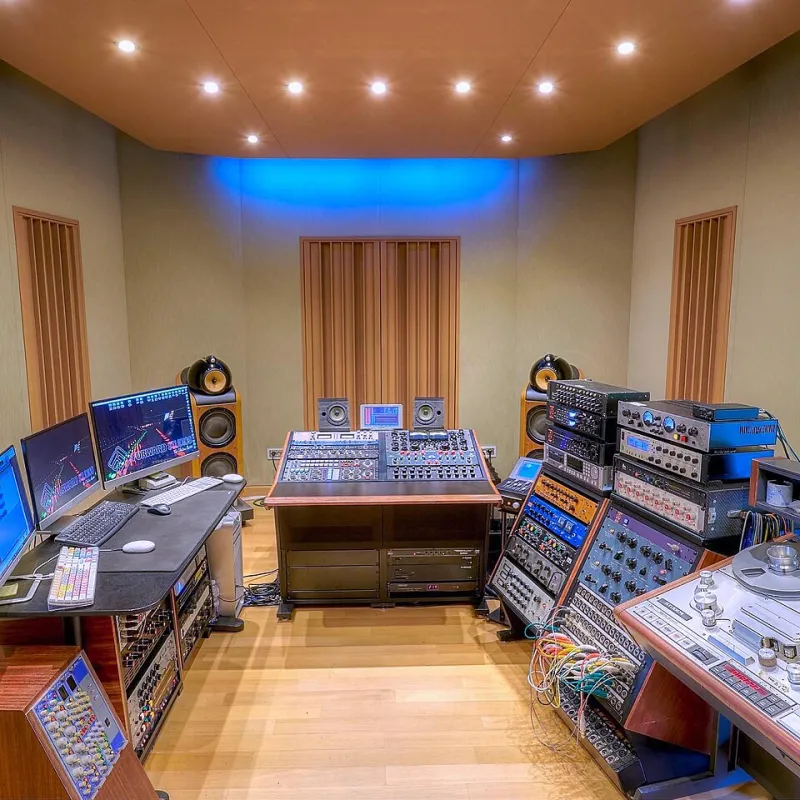
Photo: Forward Studios, CC BY-SA 4.0, via Wikimedia Commons
Desktop audio has a reputation problem. Say you’re building a hi-fi system around a desk in a small flat and someone will assume you mean a pair of plasticky computer speakers, a subwoofer under the chair and a Spotify account doing the heavy lifting. That’s not nearfield listening. That’s just a laptop with extra steps.
Nearfield is its own discipline. You’re sitting close to the speakers, the room is doing less of the work, and the desk itself becomes part of the acoustic picture. In a UK flat — especially a box room, a converted Victorian rental or a spare bedroom that has to double as an office — that’s not a limitation. It’s a useful set of constraints. In 2026, with compact amps, decent DACs and small active speakers everywhere, you can build a genuinely serious desk system without turning the place into a studio.
The trick is to stop treating the desk as a smaller version of a living room. Treat it as a room of its own.
Nearfield Is a Room, Just Smaller
The first thing to accept is that your desk is a boundary. So is the wall behind the speakers. So is the monitor, the shelf above your head and the window you keep meaning to drape properly. In a small room, these surfaces matter more, not less, because the speakers are close and the reflections arrive quickly.
That’s why expensive boxes alone won’t save you. A £1,500 pair of speakers jammed against a wall, toed in at random and sitting on a rattling IKEA desk will sound worse than a carefully placed £400 pair. The small room rewards patience. It punishes shopping.
You want the tweeters roughly at ear height when you’re sitting down. You want the speakers and your head to form a sensible triangle — not a vast one. You want them pulled forward enough that the desk edge isn’t immediately reflecting high frequencies back at you. And you want a little space behind them, even if it’s only a few centimetres, so the wall isn’t acting like a hard slap.
The Wall Is Part of the Speaker
In a compact UK flat, most speakers end up near a wall. That’s fine. It’s also why front-ported or sealed designs are often easier to live with than rear-ported boxes that want half a metre of breathing room they’ll never get.
Boundary gain is the phrase to know. Put a speaker close to a wall and the low end gets a lift. Sometimes that’s useful in a small room; sometimes it makes a modest standmount sound thick and slow. If your desk setup is booming, don’t rush out for room correction. Start by moving the speakers a few centimetres forward or sideways. Try a bit more toe-in. Put something soft behind your head if the wall is bare. You’re not faking it; you’re tuning the room.
A desk against a window is a common British flat compromise. Double glazing helps with noise, but glass still reflects. If you can, angle the setup so the speakers aren’t firing straight into the glass, or use a heavy curtain on the opposite side. Nothing exotic. Just fewer hard surfaces doing the same thing at the same time.
Amps and DACs: Small Boxes, Sensible Power
The good news is that nearfield listening doesn’t need enormous power. You’re not trying to fill a cathedral. You’re trying to move a small volume of air accurately at close range. A decent compact Class D amp or a pair of active speakers will usually be more sensible than a big integrated amplifier that eats half the desk.
If you’re going passive, look for a small integrated amp with a proper volume control and enough inputs for your actual life — turntable, streamer, maybe a TV or a CD player from the charity shop. A built-in DAC is handy, but don’t pay a premium for one if you already have a separate DAC you like. The same goes for streaming: a compact streamer or a DAC with network features can be the whole source, or you can simply run USB from a laptop and spend the money on speakers.
Active speakers deserve a fair hearing. In a desk system they cut box count, simplify cabling and often sound excellent at low volumes. Just check for hiss at idle — in nearfield use, a tweeter that’s silent from the sofa can be audible from 60cm away. Buy from somewhere with a returns policy, or audition properly. This is one area where ‘works in a big room’ tells you almost nothing.
Cables, Isolation, and the Desk Itself
Cables are not the place to start. They’re the place to finish, and only if something is actually wrong. Use decent, sensible lengths. Keep mains cables away from signal cables where you can. If you’re getting a USB hum or a digital click, a shielded cable or a different port may help. But don’t spend £200 on a cable to fix a problem that a £10 reposition would solve.
Isolation matters more on a desk than many people expect. Speakers coupling directly into a hollow desk can make bass sound bloated and vocals cloudy. Small foam pads, cork mats, gel isolators or proper desktop stands can all help. You don’t need audiophile jewellery. You need to break the direct mechanical path between speaker and desk, and get the tweeter to the right height. Blu-Tack has done more for British desktop audio than most hi-fi accessories ever will.
Three Sensible Budget Tiers
At the entry level — roughly £250 to £450 — think active speakers or a small Class D amp with modest standmounts. Buy used where it makes sense, but check for driver damage and noisy volume pots. A compact DAC or a simple USB interface can handle the source. Spend time on placement. This tier can sound genuinely good in a small room.
In the middle — around £500 to £900 — you can add better speakers, a cleaner amp or a DAC with more useful inputs. This is where active speakers with proper low-volume behaviour start to make a lot of sense. It’s also where a small desktop stand and a bit of acoustic common sense will do more than another box.
Above £1,000, the rules don’t change. You’re buying refinement, lower distortion, better cabinet construction and nicer finishes. In a tight flat, you’re often buying a problem too: bigger speakers that need more space than the desk can give. Be honest about the room. A serious nearfield system is not the one with the highest price tag; it’s the one that fits the space and the way you listen.
The One Upgrade That Beats Everything Else
Before you buy anything else, move the speakers. Then move them again. Sit where you actually sit. Play something familiar — not a test track, just a record you know inside out. Listen for a thick midrange, a hollow desk reflection, a tweeter that’s too low. Small adjustments often deliver bigger gains than a new DAC.
A desk system in a UK flat can be properly serious. It just asks you to accept the brief: close listening, small boundaries, sensible boxes and a bit of care. That’s not a compromise. That’s the job.