Stylus or Story? How UK Vinyl Fans Can Spot Real Wear Before Spending
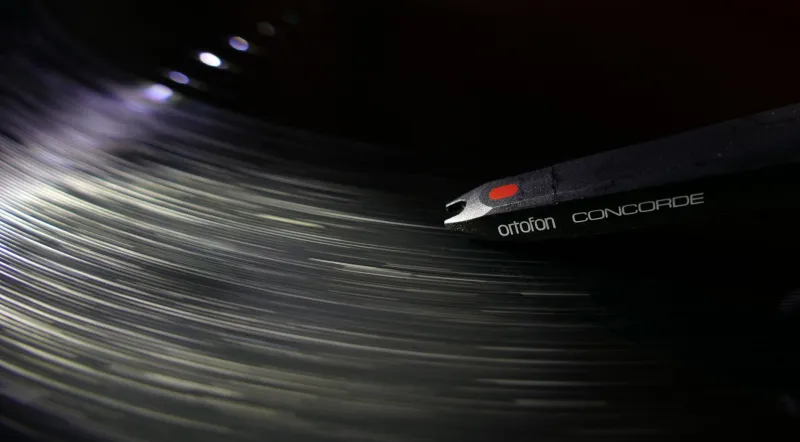
There are few parts of a hi-fi system that inspire more quiet anxiety than the stylus. It is tiny, expensive-ish, buried under a headshell and responsible for turning physical squiggles into music. It is also a consumable. That last word matters, because a lot of turntable advice treats the stylus like a sacred relic — something you upgrade for moral reasons rather than practical ones.
The sensible question in 2026 is not ‘should I buy a better cartridge?’ It is ‘is this one actually worn out, and if so, what replacement makes sense for this deck, this arm and this record collection?’ Here is a UK-friendly way to work that out without handing a dealer a blank cheque.
Separate wear from setup first
A stylus can be worn. It can also be misaligned, clogged, set too light, set too heavy, or fighting a record that has never seen a brush. The symptoms overlap: sibilance that turns ‘sss’ into a small explosion, distortion toward the inner grooves, a channel that sounds weaker than the other, or a general sense that the music has gone grey.
Before you blame the needle, do the boring stuff. Clean the record. Clean the stylus with a proper brush — dry or with a stylus cleaning fluid, depending on what the manufacturer recommends. Check tracking force with a gauge rather than trusting the dial. Check anti-skate. Make sure the cartridge is aligned in the headshell and that the deck is level. If the problem survives all that, then you have a more honest case for inspection.
The inspection tricks that actually help
You do not need a laboratory. A jeweller’s loupe, a phone macro lens or a cheap USB microscope can all show you more than the naked eye. Look at the tip under strong, angled light. A healthy stylus has a defined shape. A badly worn one can look polished, flattened or asymmetrical, and the cantilever may be sitting oddly. Do not poke it with a pin. Do not ‘just give it a clean’ with your fingernail. That is how small problems become new-cartridge problems.
A play test is just as useful. Find a record you know well, ideally one with demanding inner grooves and plenty of treble. Listen on headphones. Does the last track break up? Does the vocal lose focus? Is one side louder? If you have a test record with high-frequency bands, use it, but do not treat it as scripture. The best test is still a record you have played a hundred times.
Hours matter, but only as a rough guide. Many hi-fi styli are expected to last somewhere around 500 to 1,000 hours, with DJ and heavy-use styli often rated differently. Keep a simple note of when you fitted the current one. If you are past 700 hours and the sound is getting ragged, replacement is reasonable. If you are at 300 hours and something sounds wrong, investigate setup first.
Ask the shop for evidence, not a verdict
A good dealer can inspect a stylus under a microscope and tell you what they see. That is useful. What is not useful is a vague ‘it’s worn, mate’ followed by a recommendation that happens to cost £250. Ask to look through the scope. Ask what specifically is worn. Ask whether a replacement stylus is available for your cartridge, because many moving-magnet designs let you swap the stylus assembly rather than the whole cartridge.
That distinction is where sensible spending starts. If you own an Audio-Technica AT-VM95 body, for example, you can move up the stylus range without replacing the generator. If you own a cartridge with no user-replaceable stylus, the maths changes. The shop is not the enemy here. Blind upgrading is.
Under £100: the sensible zone
For most UK listeners, the sub-£100 replacement market is genuinely good. The Audio-Technica AT3600L remains a bargain, the AT-VM95E is a solid all-rounder, the Rega Carbon is a common fit on entry decks, and Ortofon’s OM10 is still kicking around for a reason. Prices move, but these are broadly £30 to £80 territory depending on model and stock.
At this level, do not get lost in exotic claims. Buy from a reputable UK dealer, check that the stylus is genuine, and make sure it suits your arm. A cheap conical stylus can sound perfectly musical; an expensive elliptical fitted badly will not. If you play a lot of second-hand vinyl, a slightly more robust stylus profile can be worthwhile, but it will not fix scratched records or a dirty collection.
Beyond £100: spend for a reason
Once you pass £100, the conversation changes. Microline and Shibata profiles, better cantilevers and tighter tolerances can reduce inner-groove distortion and extract more detail. The Audio-Technica AT-VM95ML, Nagaoka MP-110, Ortofon 2M Blue and Goldring options all have their fans. None of them are magic. They are better tools with better tips, and they still need a decent arm and a clean record.
This is also where matching matters most. A high-compliance cartridge on a heavy arm can wobble; a stiff, low-compliance cartridge on a light arm can sound constrained. If you are unsure, stick to what the turntable maker recommends or ask a dealer who knows the deck. Check cartridge weight and headshell mass too. Some Rega arms need spacers for taller cartridges, and VTA is not a myth — it is just geometry.
Do not forget the phono stage. Moving-magnet and moving-coil cartridges are not interchangeable without the right input. If you are moving from MM to MC, budget for that as well. The cartridge is not the whole upgrade.
A simple decision tree
Clean and set up the deck. Inspect the stylus. Play a known record. If wear is confirmed, replace the stylus assembly where possible. If you want to upgrade, set a budget and match the cartridge to the arm, not to a forum thread. Keep the old body if it is useful; skip the mysterious second-hand cartridge with no history. Buy from a shop that will talk to you after the sale.
The needle’s worth is not measured by its price tag. It is measured by condition and fit. Ignore the mythology. Keep the physics.