The Room Always Gets a Vote: How to Audition Hi-Fi Like You Actually Live With It
There is a particular kind of confidence that comes over you in a good dealer demo room. The chair is comfy, the lighting is flattering, the speakers are placed with millimetre precision, and the person handing you the remote has heard this system sound brilliant about four hundred times. You nod. You say something about “lovely midrange”. You get out your card.
Then you get it home, put the speakers where they actually fit, and wonder why the bass has turned into a chest cold.
This is not a conspiracy. It is just physics plus furniture. A demo room is a useful tool, but it is not your front room. In 2026, with more dealers offering home loans and online orders carrying proper return rights, there is no good reason to treat a showroom listen as the final word.
The showroom is a starting grid, not the finish line
A dealer room is usually doing three things at once: showing off the gear, removing obvious problems, and giving you a quiet space to hear differences. That is genuinely valuable. If a speaker sounds harsh there, it is unlikely to become silky at home. If an amp cannot control a bass line in a treated room, your bay window will not fix it.
But the reverse is also true. A speaker that sounds a bit thin in a large, carpeted demo room may sound beautifully balanced in a smaller UK living room. A pair that seems bass-light in free space might boom when pushed near a wall. A bright amp might calm down on a warm-sounding pair of speakers in your actual space — or it might get worse. You cannot know until the room gets a vote.
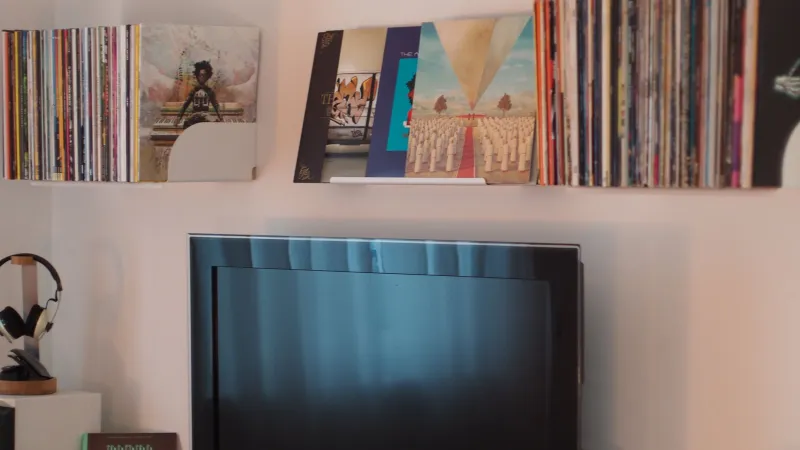
And your room always gets a vote. Victorian terraces, new-build flats, converted lofts, suspended timber floors, chimney breasts, radiators, double glazing and the humble sofa all shape what reaches your ears. So does where you sit. So does the fact that one speaker has to go slightly closer to the telly than the other.
Use the demo to eliminate, not to decide
A sensible 2026 routine starts by narrowing the field. Pick two or three candidates, not eight. Take a dealer demo if you can, but go in with a shortlist and a job for the session: eliminate anything that is obviously wrong for you. Harsh treble you cannot live with? Tiny knobs you hate? A streamer app that makes you want to throw your phone in the bin? Cross it off.
What you should not do is decide between two closely matched systems in a room that is not yours. That is where home auditioning earns its keep.
Ask the dealer about a home loan before you get too attached. Many UK specialists will let you take demonstration stock home for a few days, sometimes against a deposit. Terms vary, so get the details in writing: how long you have, what condition the gear must be in, who pays carriage, and whether the deposit is refundable. A good dealer would rather lend you a pair of speakers for a week than process a return later.
If you are buying online, remember that distance-selling rules are not a free rental scheme, but they are there for a reason. Under the Consumer Contracts Regulations 2013, most online or phone orders give you 14 days from delivery to cancel, then another 14 days to send the goods back. Check the retailer’s terms, keep the packaging intact, and do not treat a home trial as an excuse to gig with the gear. Used properly, though, it is a sensible safety net for a purchase you cannot hear in person.
The home audition: a week, not ten minutes
When the gear arrives, resist the urge to judge it in the first ten minutes. First impressions are useful, but they are mostly about difference, not long-term satisfaction. Set up properly, then live with it.
Start with placement. Put the speakers roughly where they will end up, not where they look best for a photo. Give them a little space from the wall if you can, and try a modest toe-in. If the bass is heavy, move them slightly further out or away from corners. If the soundstage feels narrow, bring them a touch closer together. Small changes often matter more than swapping cables.
Then use music you know intimately — not audiophile clichés you have heard twice. A few tracks that work well for judging a system in a normal UK room:
- Something with dense, natural vocals, where you know exactly how the singer sounds.
- A bass-heavy track you have played on every system you have owned, so you can hear boom versus control.
- A busy rock or electronic track that reveals whether the system gets shouty when pushed.
- A simple acoustic recording that shows up harsh treble and muddled midrange.
- One track you love for reasons that have nothing to do with hi-fi. If the system makes you want to keep listening, that counts.
Listen at normal levels, not just loud ones. Most of us listen at moderate volume in the evening, often with other people in the house. A system that only comes alive at 85dB is not much use in a flat with paper-thin walls. Try it quiet, too. Can you still follow the bass line? Does the top end stay sweet?
A simple checklist for the room where it lives
After a few days, ask yourself some blunt questions.
Does the bass behave in your actual room? It should feel tight and tuneful, not like someone is knocking on the floorboards from below. Is the treble comfortable over an evening, or does it make you wince on certain recordings? Can you hear the words without straining? Does the system hold together when the music gets complicated? Is there enough life in it to make you choose a record over the telly?
Also judge the boring stuff. Does it fit? Is it easy to use? Does the app work reliably? Does it hum when the fridge kicks in? Would you be happy looking at it for five years? A home audition is not just about sound; it is about whether the thing belongs in your life.
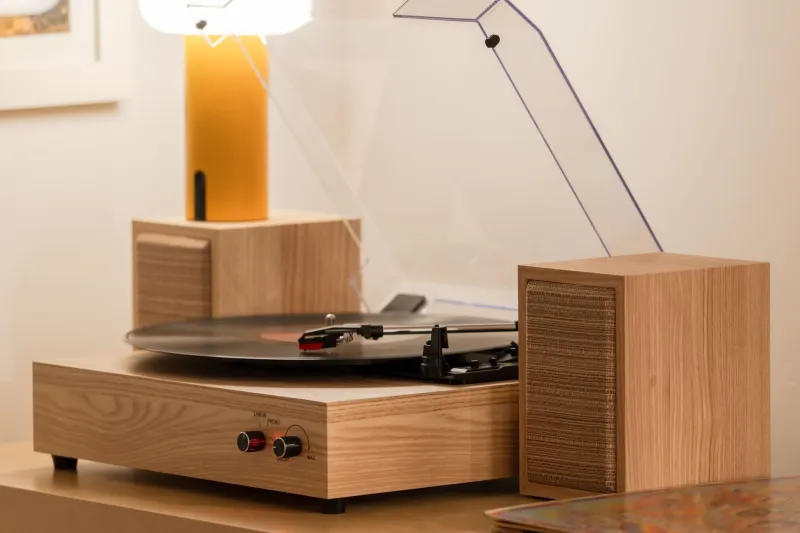
And be honest about your room. If your only sensible speaker position is tight against a wall, do not buy speakers that need a metre of clear air. If your floor is bouncy, a turntable may need more care than a streamer. If your living room is also a dining room, a playroom and a route to the kitchen, the system has to survive real life.
The room is part of the system
The useful lesson is not that dealers are dodgy or that demo rooms are pointless. It is that a hi-fi system is a room, a pair of ears and a set of habits as much as it is a box with a badge on it. Use the showroom to learn what is possible. Use a home loan, a careful online order or a patient dealer to learn what is actually true in your house.
In 2026, the best audition is not the most impressive one. It is the one where you stop noticing the gear and start noticing the music — in your front room, with your furniture, your neighbours and your records. That is the review that matters.