The Puck Stops Here: Do Vinyl Clamps and Stabilisers Earn Their Keep?
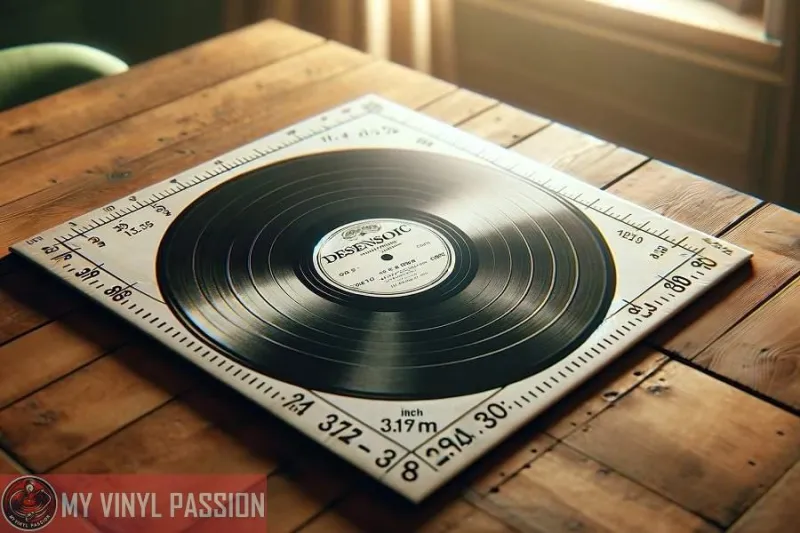
Photo: vinyl record clamp weight on turntable close up, via myvinylpassion.com
There is a particular kind of hi-fi purchase that feels almost too easy. You lift the lid, drop a machined lump of metal onto the spindle, and wait for the sound to improve. Record clamps and stabilisers promise exactly that: better coupling, flatter vinyl, lower resonance, cleaner bass. In 2026, there are more of them than ever, from £25 weights to £300 peripheral rings, and they all arrive with a satisfying sense of purpose.
The trouble is that a clamp is not a magic tuning device. It is a mechanical part doing a specific job, and whether that job matters depends on your turntable, your records and your expectations. So let's separate the useful from the hopeful.
What a clamp is actually doing
A record clamp or weight adds mass at the centre of the record and, in some designs, presses the record down onto the platter. A screw-down clamp does this more firmly than a simple weight. A peripheral ring clamps the outer edge as well, which is a different proposition entirely.
The theory is straightforward. If the record is held more firmly against the platter, it is less likely to resonate on its own, and the stylus is reading a more stable surface. A bit of extra mass can also add inertia, which may help with speed stability on some decks. None of that is nonsense. It is just not the same as a universal upgrade.
The key phrase is "held more firmly against the platter." If your platter is already heavy, flat and well damped, and your record already sits nicely on a decent mat, there is less room for improvement. A clamp may change the sound slightly, but it is not correcting a fault. It is nudging a system that is already doing the basics.
The three jobs, and which one you need
Most clamps are sold as if they do all three jobs at once. In reality, they tend to specialise.
First, there is coupling: pressing the record to the platter to reduce movement and resonance. This is the most plausible benefit on lightweight platters and decks with felt mats. A modest weight can make a difference here, especially if the record is slightly dished.
Second, there is flattening. A centre clamp can help a record that is dished in the middle, but it will not fix a record that is warped at the edge. For that you need a peripheral ring, which is a much more expensive and fussy solution. Most second-hand vinyl in the UK has a bit of a wave to it, thanks to lofts, radiators and years of being stacked at the wrong angle. A clamp is not a record flattener. A ring is closer, but it is still not a miracle.
Third, there is ergonomics. A clamp makes the record easier to place and remove, and it can look rather good. That is a legitimate reason to buy one, as long as you are honest about it. A £40 puck that makes you enjoy using your deck is not a waste of money. It is just not an acoustic breakthrough.
When a clamp earns its place
I would reach for a clamp first if the deck has a light platter, a felt mat and a record that sits a little unevenly. In that context, a basic 300g weight or a modest screw clamp can tighten up the bottom end and make the surface feel a bit calmer. It is not a night-and-day change, but it can be a sensible £30-£60 experiment.
It is also worth trying if you have a handful of slightly dished records that you actually want to play. A centre clamp can make those sit better and reduce the feeling that the stylus is riding a gentle hill. Check the spindle height first, though. Some decks have short spindles, and some clamps sit too low or foul the record label. Also check dust-cover clearance. A clamp that looks elegant on the platter is no use if you cannot close the lid.
And if you are using a suspended deck, be careful with weight. Adding mass to the platter changes the load on the bearing and the suspension. A small clamp is usually fine. A heavy weight is not always a good idea. If in doubt, go lighter.
When it is just a paperweight
If your deck has a heavy platter, a well-damped mat and a record that already sits flat, a clamp is unlikely to transform anything. You may hear a small difference in bass or surface noise, but it will be the kind of difference that disappears when you stop concentrating. That does not make the clamp bad. It just makes it a low priority.
It will definitely not fix a worn stylus, a badly set up tonearm, a noisy phono stage or speakers jammed into a corner. Those are the things that actually make a UK flat sound like a UK flat. A clamp cannot undo a room mode, a cheap cartridge or a record that has been cleaned with a tea towel.
There is also a practical limit. A clamp adds weight to the spindle and bearing. Most modern decks can handle a sensibly sized puck, but if you are unsure, ask the manufacturer or keep the weight modest. A clamp should not be a stress test for your turntable.
The sensible UK buying guide
For most people, the sweet spot is a simple weight or screw clamp in the £25-£80 range. You do not need to spend more unless you have a specific problem, such as edge warp, or a deck that is known to respond well to extra mass. Peripheral rings are a specialist purchase. They are brilliant for some records and deeply irritating for others, and they cost more than many people spend on a cartridge.
Try before you buy if you can. A good dealer will let you take a clamp home for a weekend, or at least let you try it on your deck in the shop. Failing that, buy from somewhere with a returns policy. Listen to one record you know well, at the same volume, with and without the clamp. Listen for bass definition, surface noise and the way piano notes decay. Do not listen for a revelation. Listen for a small, repeatable change.
My verdict? A clamp is a worthwhile accessory if you have a light platter, a slightly dished record or a deck that benefits from a bit of mass. It is an expensive paperweight if you are expecting it to fix a system that needs better setup, better cleaning or better speakers. Buy it for what it does, not for what the box promises. And if you are choosing between a clamp and a decent record-cleaning brush, buy the brush first. Your vinyl will thank you.