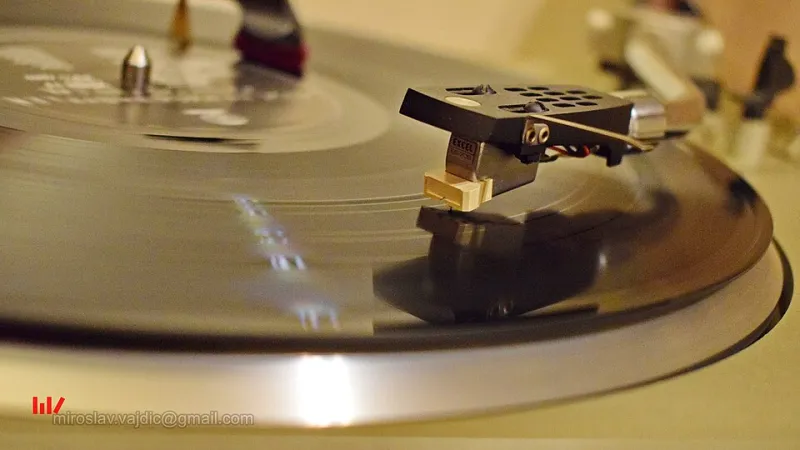
The 11pm Effect: Why Your Hi-Fi Wakes Up After Dark

Photo: late night hi-fi listening living room UK warm lamp, via musicchartsarchive.com
There is a very British ritual that most of us know without ever naming it. At 7pm the system sounds vaguely grey: bass a bit lumpy, piano with a thin edge, voices slightly held back. By 11pm, once the dishwasher has finished, the kitchen downlights are off and the house has gone quiet, the same tracks suddenly open up. The hi-fi has not been upgraded. The room has not changed. So what is going on?
Some of it is you. Late at night you are less rushed, the ambient noise floor is lower and you are listening more closely. But some of it is genuinely electrical. In a UK home, your hi-fi shares a ring main with kitchen appliances, boiler controls, LED drivers, dimmer switches, broadband routers and whatever heat pump the neighbours have installed. None of that makes your amplifier instantly terrible, but it can put a thin layer of hash over everything. The 11pm effect is usually a mix of acoustics, mains noise and expectation. The useful question is not whether it is real. It is which part is real in your room.
First, rule out the boring bits
Before you start blaming the consumer unit, do a fair test. Pick three tracks you know well: one with solo voice, one with acoustic piano or guitar, and one with a bass line you can actually follow. Use the same volume for every session. A cheap SPL meter app on your phone is fine for matching levels, because a difference of even a decibel or two will make the later listen sound better. Write down what you hear at 7pm and again at 11pm for a week. If the 11pm session only sounds better when you are in a good mood, that is useful information.
What is actually changing?
A ring main is a shared circuit. Your hi-fi may be the only thing on it trying to reproduce a violin, but it is not the only thing drawing current. Fridges cycle. Boilers fire. Heat pumps have inverter drives that can inject noise back into the mains. Dimmers chop the mains waveform and cheap LED drivers can be surprisingly noisy. Add in phone chargers, mesh Wi-Fi nodes and a games console in standby and you have a domestic electrical environment that changes throughout the evening.
This does not mean you need to panic about your wiring. It means you should stop treating the mains as an abstracthi-fi concept and start treating it as part of the system. The good news is that the fixes run from free to serious, and the free ones are often the ones worth trying first.
A two-week test plan that costs nothing
Week one is about observation. Listen at 7pm and 11pm, same tracks, same level, and note whether the difference is in the bass, the treble or the noise between notes. Week two is about isolation. At 11pm, with the system playing, turn off one non-essential thing at a time: the kitchen downlights, the router, the TV, the games console, the phone charger. Do not switch off the fridge or boiler unless you know what you are doing. Listen for a change over the next minute. If nothing changes, you have saved yourself a lot of money.
You can also try a different socket on the same ring main, or plug the system into a single decent unfiltered block rather than a daisy chain of extension leads. Move signal cables away from mains cables. Keep the router and any smart speaker a bit further from the amplifier. These are not glamorous fixes, but they are cheap and reversible.
Cheap fixes that are not nonsense
Start with plug order. In a simple system, the power amplifier can go straight into the wall and the source components can share a decent block. Avoid stacking multiple extension leads and avoid the cheapest switched blocks you can find. Check that IEC plugs are pushed fully home. If you have a dimmer switch in the listening room, consider replacing it with an ordinary switch; that is a job for an electrician, but it is a more honest upgrade than another magic box.
Cable routing matters too. If a mains cable runs parallel to an interconnect for a couple of metres, move one of them. It costs nothing and sometimes removes a faint buzz. Ferrite clamps can help with specific problems, but they are not a cure-all. Try before you buy, and do not turn your system into a sculpture made of clip-on magnets.
The middle ground
Mains conditioners and regenerators can help in some homes, especially flats with shared supplies and lots of small switch-mode power supplies. They can also make things worse, or simply do nothing. Borrow one if you can. Buy from a dealer with a returns policy. A dedicated spur or radial circuit for the hi-fi is the serious fix, and it is the one to consider only after you have done the free tests. It needs a qualified electrician and it is not a DIY job. In a rented flat it is usually a non-starter.
If you cannot rewire
Most of us cannot. If you rent, live in a flat or share a consumer unit with a neighbour’s heat pump, work with what you have. Use one good unfiltered block, keep noisy appliances off where possible, and do not obsess over the last five per cent. Late-night listening is also about lower ambient noise. Closing the curtains, turning off the fridge for ten minutes and putting your phone in another room can do more than a £500 mains product.
The honest conclusion
The 11pm effect is real enough, but it is rarely one thing. It is the room getting quieter, your brain settling down and the mains getting a little less busy. Fix the cheap things first. Test one change at a time. Leave the dedicated spur until you have evidence that your supply is the problem. And if the system still sounds better after dark, enjoy it. That is what the hobby is for.