Warm Platters, Cold Hard Cash: Snagging a Sub-£300 Used Turntable in 2026
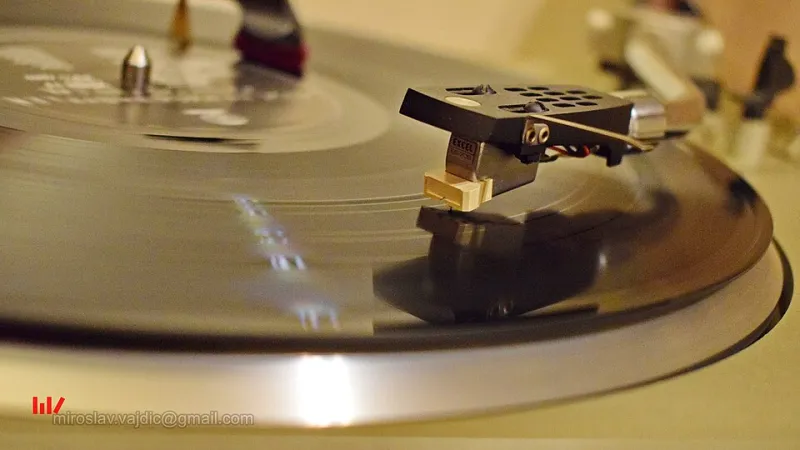
Photo: Miroslav Vajdic, CC BY-SA 2.0, via Wikimedia Commons
The £300 question
Buying a used turntable under £300 in 2026 is a bit like buying a second-hand car. The good ones exist. The bad ones also exist, and they’re usually photographed in a dimly lit spare room with the words ‘worked last time I used it’ in the description. The difference is that a bad turntable doesn’t break down on the M6. It just quietly ruins your records, one slightly worn stylus at a time.
The vinyl revival has cooled from its peak, but prices for decent used decks haven’t collapsed. If anything, the market has split. Sought-after models hold their value, ordinary 1980s decks sit unloved on Facebook Marketplace, and a lot of listings are priced on nostalgia rather than condition. Your job is to work out which is which before you hand over cash.
The models genuinely worth chasing
At the sensible end, Rega is the obvious starting point. An older Planar 2 or early Planar 3 can sometimes be found near the £300 mark, though clean examples often creep above it. The appeal is simple: light, stiff plinths, excellent arms and a straightforward upgrade path. A Rega that has been looked after is a proper hi-fi deck, not a lifestyle ornament. Check for arm bearing play and a wonky platter; Rega arms are brilliant but not indestructible.
Pro-Ject Debut models are the other common route. A used Debut Carbon or Esprit from the past decade is a realistic sub-£300 buy, and parts are easy to find. They’re not as mechanically charming as a Thorens, but they’re predictable. Look for speed stability, a clean belt and a platter that doesn’t wobble. The tonearm wiring is delicate, so check that the cartridge hasn’t been twisted into a weird angle by an overenthusiastic previous owner.
Thorens TD 160 and TD 166 decks are the classic enthusiast choice. A TD 160 in good order is a lovely thing: suspended subchassis, a heavy platter and a proper sense of occasion. But the suspension needs setting up, the arm may be tired, and a badly stored example can have a sagging plinth or corroded parts. Buy one because you want a project as much as a record player. If you want plug-and-play, look elsewhere.
Dual CS 505-2 and CS 505-3 decks are the quiet bargains. They’re not fashionable, but they’re well engineered, often cheap and surprisingly capable. A clean one for £100–£180 is decent value in 2026. Just check the cueing mechanism and the speed selector, because dried grease can make them sluggish. Technics direct-drive decks are worth a look too, but be realistic: a Technics SL-1200 Mk2 is not a sub-£300 turntable any more, and paying a premium for one because it looks like a DJ deck is not the same as getting good value. An SL-D2 or SL-Q2 can be a better buy for home listening.
The models that are mostly nostalgia
Be wary of anything described as ‘vintage’ with no service history and a price tag above £200. That includes many 1970s Japanese belt-drive decks with unserviceable motors, odd cartridge mounts and plinths that smell of damp. Also be sceptical of budget 1980s linear-tracking turntables. When they work, they’re fine. When they don’t, they can be a nightmare of unobtainable parts and brittle plastics.
And please don’t buy a used turntable simply because it has a famous badge. A tired Thorens is not automatically better than a healthy Rega. A Technics with a scratched platter and a missing headshell isn’t a bargain just because the model number looks impressive.
Where to buy in the UK
eBay is the biggest marketplace, and buyer protection is useful. The catch is postage. A turntable is a heavy, fragile object with a platter that wants to escape. If the seller won’t remove the platter and secure the tonearm, walk away. Gumtree and Facebook Marketplace are better for local collection because you can test before you pay, but they’re also where the ‘no timewasters’ listings live. Arrange to see the deck in person, bring a record you don’t mind sacrificing and ask to hear it through a system you trust.
UK dealers are the safer route. You’ll pay more, but you get a warranty, a proper service and someone to complain to if the speed drifts. For a first serious deck, a dealer-serviced Rega or Pro-Ject at £250–£300 can be better value than a private bargain that needs £150 of work.
What to check before you hand over cash
Start with the stylus. A worn stylus is not just a bad sound; it can damage records. Look at the cantilever under a light. Is it straight? Is the tip clean? If you can’t inspect it, assume you’ll need a replacement and budget for it. A basic replacement stylus might cost £30–£60. A decent moving-magnet cartridge can be £80–£150 fitted. That changes the maths quickly.
Spin the platter by hand. It should feel smooth, with no grinding or tight spots. Check for wobble by watching the platter edge as it turns. A little run-out is normal on older decks; a visible shimmy is not. Listen for motor noise with the platter spinning and the arm cued up. A quiet rumble is acceptable on a budget deck. A screech is not.
Belts are cheap and easy to replace, so don’t panic about a stretched belt. But do check that the pulley and motor spin freely. On direct-drive decks, check that the speed holds and that the start/stop buttons work without a fight. On suspended decks like the Thorens, bounce the subchassis gently. It should move smoothly, not clunk.
Arm wiring is the quiet killer. Remove the headshell if you can and check the cartridge tags. They should be snug, not corroded or hanging by a thread. Gently move the arm through its arc. There should be no stiffness or play in the bearings. If the arm feels notchy, walk away unless you’re confident about a rewire or bearing service.
Finally, check the basics: does it come with a dust cover, a platter mat, a headshell and a counterweight? Missing parts add up. A deck with no counterweight is not a bargain; it’s a project.
What a service really costs
A belt is £15–£30. A basic stylus is £30–£60. A decent cartridge is £80–£150. A full service from a UK dealer might be £100–£200, depending on the deck. Arm rewiring can be £80–£150. Bearing work or motor replacement can push a ‘cheap’ turntable well past the cost of a better one.
That’s the money-pit test. Add the purchase price to the likely service cost and compare it with a dealer-serviced deck at £300. If the numbers are close, buy the serviced one. If you’re buying a Thorens because you want to learn how it works, fine. If you’re buying it to save money, be honest with yourself.
The sensible sub-£300 strategy
In 2026, the sweet spot is a used Rega or Pro-Ject with a known history, or a clean Dual if you want to spend less and don’t mind the styling. Buy locally if you can, test it properly, and budget for a new stylus from day one. A good used deck under £300 is still one of the best ways into vinyl. A bad one is a reminder that ‘vintage’ is not a warranty.